


MEDIA RELEASE
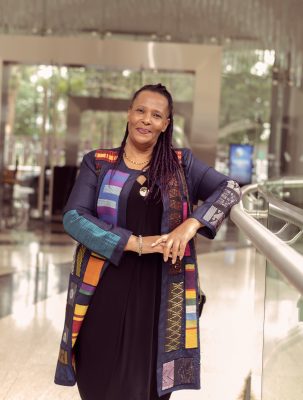
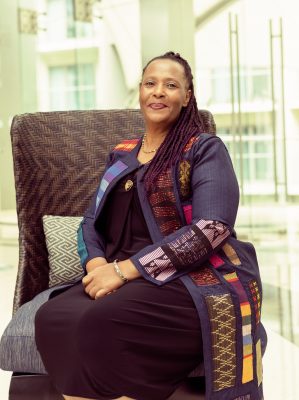
PROFESSOR WANGUI WA GORO, PIONEERING TRANSLATOR AND AFRICAN LANGUAGES & ADVOCATE DELIVERS THE 13TH INTERNATIONAL AFRICAN WRITERS’ DAY LECTURE
The South African Literary Awards (SALA) welcomes aboard the City of Joburg – through the Library and Information Services – into a partnership that includes the national Department of Sport, Arts and Culture (DSAC) in hosting the 13th International African Writers Day Lecture and the 20th SALA Awards hand-over ceremony on 11th Nov 2025, at the Roodepoort Theatre and Museum, Gauteng Province.
Professor Wangui wa Goro is this year’s distinguished guest keynote speaker at the 13th International African Writers’ Day Lecture, whose theme this year is: The Future of African Writing and Translation: Transforming Landscapes and Enhancing the Mbokodo Narratives.
She is a globally acclaimed translator, leading translation studies theorist, scholar, curator and advocate. She came to public attention through the groundbreaking translation of the late Professor Ngugi wa Thiong’o’s novel, Matigari and his children’s books in the Njamba Nene series among other translations from English, Italian, French and Kiswahili into her mother tongue Gikuyu. She is a writer in her own right with works appearing in the award-winning Ama Ata Aidoo’s collection of African Love Stories, and Margaret Busby’s New Daughters of Africa.
She is a writer, poet, academic (recognized with an honorary Professorship of Translation Practice at the School of Oriental and African Studies in London (SOAS). She is a cultural curator and has curated the Africa in Translation (AiT) festival in different parts of the world.
Professionally, she has worked internationally as an editor and has additionally supported international scholarship on Africa and African knowledges. In this regard, she is affiliated to the African Leadership Centre at King’s College (ALC) London as a Visiting Academic. Her great passion is literature and intersectional freedom which she promotes through the three P’s for African languages: protect, preserve and promote.
In 2024, the major theme of the 12th Africa Century International African Writers Conference (ACIAWC) was: Artificial Intelligence (AI), Social Justice and Social Change: The future of literature in Africa. Quo Vadis? delivered by Prof Vuyisile Msila, a poet, author of novellas, short stories, children’s books, and biographies who works at Unisa’s Thabo Mbeki African School of Public and International Affairs where he is a professor of Public Leadership Studies.
President Thabo Mbeki delivered the inaugural edition thereof in 2012, followed by Ms Samia Nkrumah, Professor Micere Mugo, South African Minister of Sport, Arts and Culture Nathi Mthethwa, Professors Mandla Makhanya, Zodwa Motsa, Kwesi Kwaa Prah, Puleng LenkaBula, the Vice Chancellor and Principal of the University of South Africa, and Dr. Gcina Mhlophe, South Africa’s world renowned storyteller, author and actor, among the distinguished line of speakers and scholars.
Mr Morakabe Raks Seakhoa, the Director of the Conference, said “…this year we are turning our gaze towards the transformative power of literary translation and interpretation and their impact on literature, social justice and social change and what the future portends in the creative and cultural space”.
The International African Writers’ Day Lecture aims to, as the then-OAU’s Conference of African Ministers of Education and Culture (meeting in Coutonou, Benin, in 1991) resolved, “…afford the African people a moment of pause within which to reflect on the contribution of African Writers to the development of the Continent”. We continue to build on that vision in the spirit of working towards the realisation of the African Union’s vision of the African Renaissance and the Africa Vision 2063.
The Lecture will be followed by the 20th Annual South African Literary Awards (SALA) prize-giving ceremony. Since 2005, these premier literary awards have honoured over 300 distinguished authors in sixteen categories and eleven official languages.
With the stellar cast made up of such excellent authors and scholars in the person of the keynote speaker, the 13th International African Writers Day Lecture portends a worthy and timely contribution to AU’s Education and Culture Ministers’ resolution of ‘…affording the African people a moment of pause within which to reflect on the contribution of the African writers to the development of Africa and its people…,” concluded Seakhoa


